
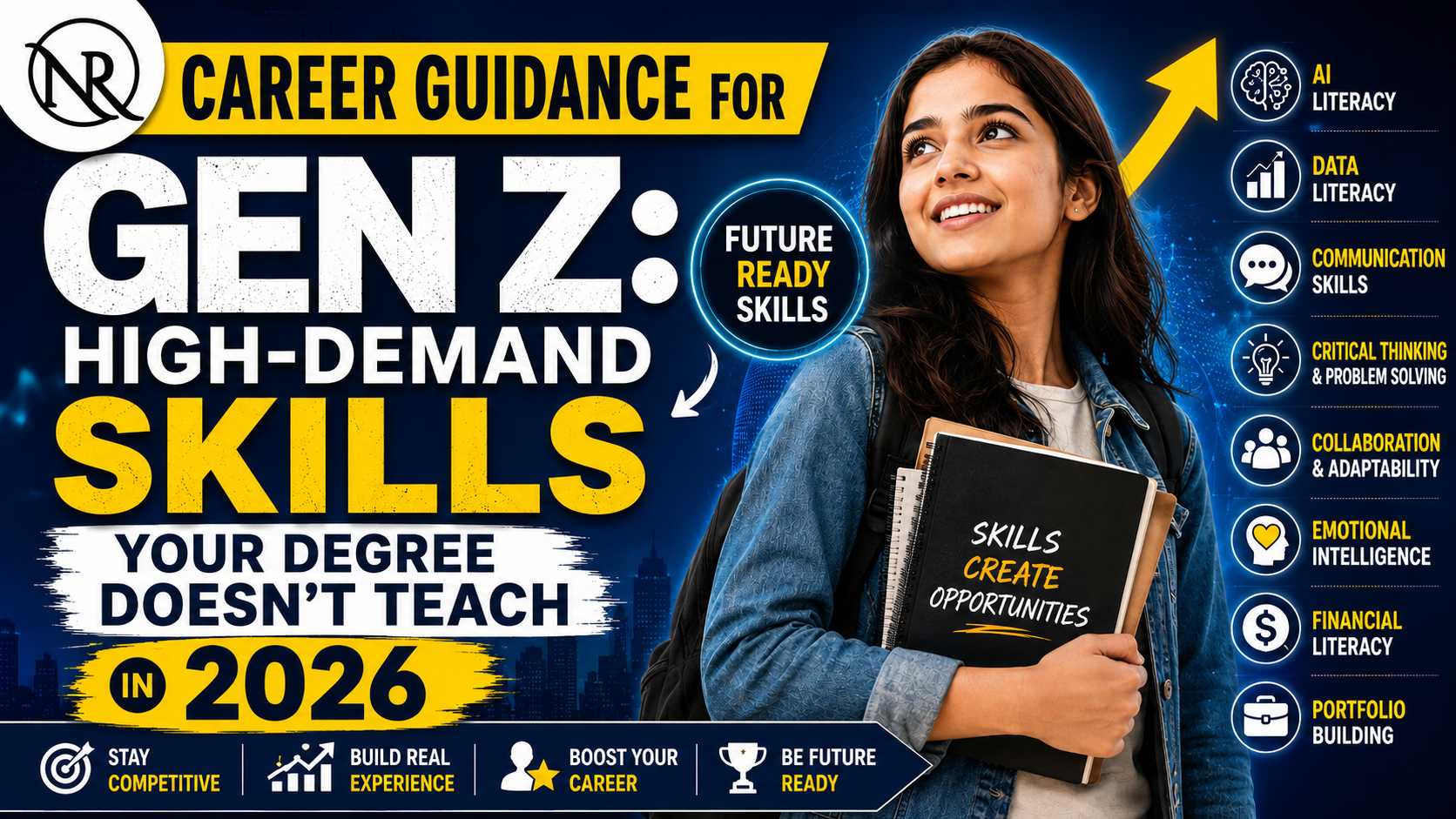
Career Guidance for Gen Z: High-Demand Skills Your Degree Doesn’t Teach in 2026
In 2026, a college degree still matters—but it is no longer enough on its own. Across industries, hiring has changed. Employers are no longer asking only what you studied; they are asking what you can do, how quickly you can learn, and how well you can adapt. For Gen Z, this is the biggest career shift of the decade.
Today’s workplace is shaped by artificial intelligence, automation, hybrid work, digital collaboration, and rapidly changing job roles. A degree may help a student enter the conversation, but it does not automatically make them job-ready. Employers now want proof of practical skills, problem-solving ability, communication, and the confidence to work with modern tools.
That is why the future belongs not just to degree-holders, but to skill-builders.
Why Degrees Alone Are No Longer Enough
Traditional education still provides important subject knowledge, discipline, and credibility. However, academic learning often does not fully prepare students for the realities of the workplace. Many graduates still struggle with professional communication, critical thinking, digital tools, workplace discipline, or presenting their ideas effectively.
At the same time, companies are changing the way they hire. They are focusing more on skills, portfolios, internships, certifications, projects, and real-world experience. In simple terms, the formula for career success in 2026 is no longer degree only. It is degree + skills + proof of work + adaptability.
High-Demand Skills Gen Z Must Learn in 2026
1. AI Literacy
AI is no longer just for coders or engineers. It is now part of marketing, finance, education, HR, research, and content creation. Gen Z must learn how to use AI tools for productivity, writing, analysis, brainstorming, and research—while also understanding their limitations and ethical use.
2. Data Literacy
Every industry now depends on data. Students do not need to become data scientists, but they should know how to work with spreadsheets, interpret data, spot patterns, and use information to make decisions. Data literacy is valuable in business, marketing, HR, finance, operations, and even education.
3. Communication Skills
One of the most underrated career skills is communication. It is not just about speaking English fluently. It is about expressing ideas clearly, writing professional emails, presenting confidently, listening actively, and speaking effectively in interviews or meetings. Strong communication makes every other skill visible.
4. Critical Thinking and Problem-Solving
Degrees often test memory, but careers test judgment. In the real world, professionals must handle unclear situations, changing priorities, and incomplete information. Critical thinking helps students break down problems, question assumptions, compare options, and make smarter decisions.
5. Adaptability and Learning Agility
The shelf life of skills is shrinking. What is valuable today may become basic tomorrow. That is why adaptability is one of the most important skills Gen Z can develop. Students who can learn new tools quickly, accept feedback, and stay flexible during change will always stay ahead.
6. Personal Branding and Digital Presence
In 2026, your online presence is part of your career identity. Employers often look at LinkedIn profiles, portfolios, and digital footprints before making hiring decisions. Students should learn how to build a professional LinkedIn profile, showcase their work, and present themselves online in a credible way.
7. Collaboration and Workplace Discipline
With hybrid and remote work becoming common, employers want people who can work independently and also contribute well in teams. Students must develop time management, accountability, meeting etiquette, follow-up habits, and the ability to collaborate using digital tools.
8. Emotional Intelligence
Technical skills matter, but emotional intelligence often decides long-term growth. Self-awareness, empathy, professional behavior, conflict management, and the ability to receive feedback are essential in any workplace. In an automated world, these human qualities become even more valuable.
9. Financial Literacy
Many students leave college without understanding salary structures, taxes, savings, budgeting, or how to evaluate a job offer. Financial literacy helps Gen Z make smarter career and life decisions, avoid unnecessary stress, and build stability early in life.
10. Portfolio Building
The smartest students in 2026 will not just say they are skilled—they will show it. A portfolio of projects, internships, case studies, writing samples, presentations, certifications, or freelance work creates proof of ability. It changes the conversation from “I can do this” to “Here is what I have already done.”
A Simple Career Roadmap for Gen Z
To stay competitive, Gen Z students should start by honestly identifying their strengths and weaknesses. Then, instead of trying to learn everything at once, they should pick one high-value skill at a time and build it deeply. A good starting sequence could be communication, AI literacy, Excel/data basics, LinkedIn optimization, and interview skills.
Most importantly, students must focus on creating proof of work—small projects, internships, volunteer tasks, blog writing, presentations, or case studies. Learning becomes more valuable when it is visible.
Conclusion
In 2026, a degree is still important—but it is only the foundation, not the finish line. The future belongs to Gen Z professionals who combine academic knowledge with practical skills, digital fluency, adaptability, emotional intelligence, and proof of work.
The real career question is no longer just, “What degree do you have?” It is: What can you build? What problems can you solve? How well can you adapt?
That is the career mindset Gen Z needs to succeed in the modern world of work.