
Introduction
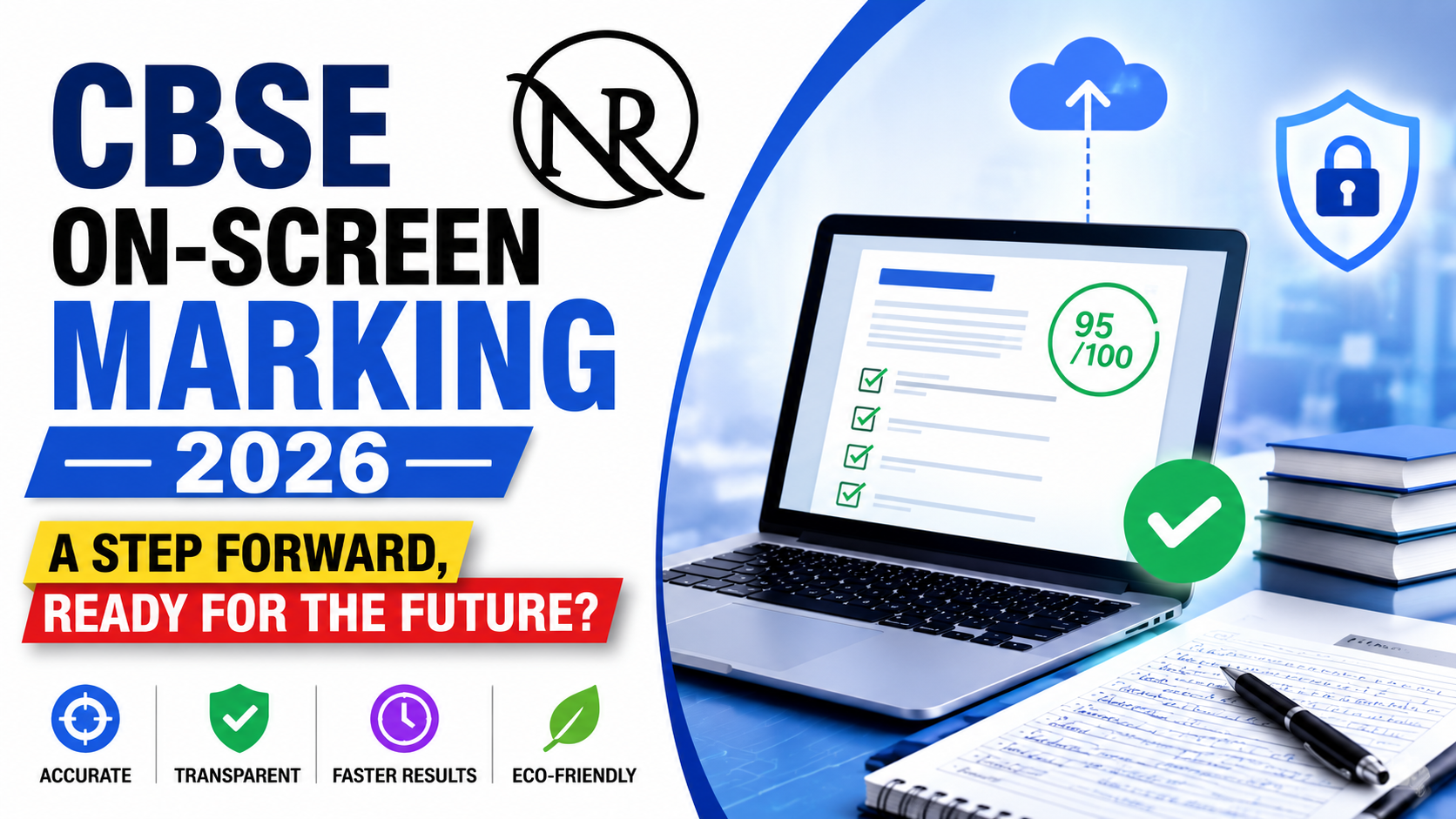
In February 2026, the Central Board of Secondary Education (CBSE) announced and implemented the On-Screen Marking (OSM) system for Class 12 board examinations across the entire country. Under this system, physical answer sheets are scanned and evaluated digitally on computer screens.
While the intention behind this digital shift is progressive, many educationists, teachers, and parents have raised serious concerns about implementing such a massive change suddenly at a national level. In this article, we discuss the pros, cons, and long-term impact of the CBSE OSM system.
What is CBSE On-Screen Marking (OSM)?
On-Screen Marking is a digital evaluation process in which:
- Answer booklets are scanned at designated centers after the exams.
- High-quality digital copies are uploaded to a secure server.
- Trained examiners check these scanned copies on their computers/laptops.
- The system automatically calculates total marks.
Important Note: This is not AI-based checking. Real teachers evaluate the answers. Only the medium has changed from physical to digital.
1. Why CBSE Should Not Have Implemented OSM Directly Across India at Once
Implementing a completely new evaluation system nationwide in one go was a bold but risky decision. Here are the major concerns:
Step-by-Step Issues Caused by Sudden Implementation:
- Lack of Proper Infrastructure Readiness Many scanning centers, especially in smaller cities and rural areas, did not have high-quality scanners, reliable high-speed internet, or technical support. This resulted in poor scanning quality in thousands of cases.
- No Adequate Pilot Testing CBSE did not conduct a proper pilot project in a few states or zones before rolling it out nationally. A phased implementation would have helped identify and fix problems early.
- Insufficient Training for Teachers Many examiners received very little or no hands-on training for on-screen evaluation. Issues like screen fatigue, difficulty reading blurred images, and unfamiliarity with digital tools affected the marking quality.
- Technical Challenges
- Blurred or unclear scanned copies
- Missing pages in digital files
- Server overload and technical glitches
- Problems during the re-evaluation process
Negative Effects of Sudden Nationwide Rollout:
- On Students: Many students received lower-than-expected marks. Pass percentage dropped noticeably in 2026. Re-evaluation requests increased significantly.
- On Parents: Widespread dissatisfaction and loss of trust in the board.
- On Credibility: Sudden changes in such a high-stakes examination created anxiety and confusion among stakeholders.
- Administrative Burden: Regional CBSE offices and schools faced heavy pressure due to technical issues.
A gradual implementation (starting with a few states or only major cities) would have been much wiser.
2. Long-Term Benefits of the OSM System
Despite the initial challenges, the On-Screen Marking system has strong potential and offers several long-term advantages:
Key Long-Term Advantages:
- Higher Accuracy Automatic totaling by the software eliminates manual addition errors that were common in the old system.
- Increased Transparency Digital records are maintained for every answer checked. Examiners cannot see the student’s name or roll number, which reduces the chances of bias.
- Faster Result Declaration No need for physical transportation of answer sheets. Results can be declared much quicker.
- Greater Convenience for Teachers Examiners can evaluate copies from their homes or schools, allowing more teachers to participate.
- Better Quality Control Senior examiners and moderators can easily review the marking digitally.
- Cost and Time Efficiency Reduces huge expenses on logistics, transportation, and physical handling of answer sheets.
- Eco-Friendly Approach Less paperwork and reduced movement of heavy bundles of answer books.
Conclusion on Long-Term Impact: If CBSE successfully resolves the technical issues, improves scanning quality, and provides proper training, the OSM system will become far better than the traditional manual checking system within the next 2–3 years.
Tips for Students in the OSM Era
- Write answers in clear, bold handwriting so they scan well.
- Leave proper spacing and use black/blue pen only.
- Draw neat diagrams with proper labeling.
- Stay mentally strong during the result season.
FAQ Section
Q1. Is On-Screen Marking also applicable for Class 10 in 2026?
No. Currently, only Class 12 board exams are being evaluated through OSM. Class 10 continues with the traditional physical checking.
Q2. Are marks getting reduced because of OSM?
Some students felt their marks were lower, but CBSE claims the system is more accurate. Initial teething problems may have caused some discrepancies.
Q3. How will re-evaluation work now?
Re-evaluation will be done on the scanned digital copies, which should theoretically be more transparent.
Q4. Will this system improve in the coming years?
Yes. If CBSE focuses on fixing infrastructure, training, and technical issues, OSM has the potential to become a much better evaluation system.
Final Thoughts
The CBSE On-Screen Marking system is a forward-thinking initiative aimed at modernizing board examinations. However, the sudden nationwide implementation without proper groundwork created unnecessary difficulties for students in 2026.
Educationists like me believe that while the vision is good, execution needs to be more careful and phased in the future.