
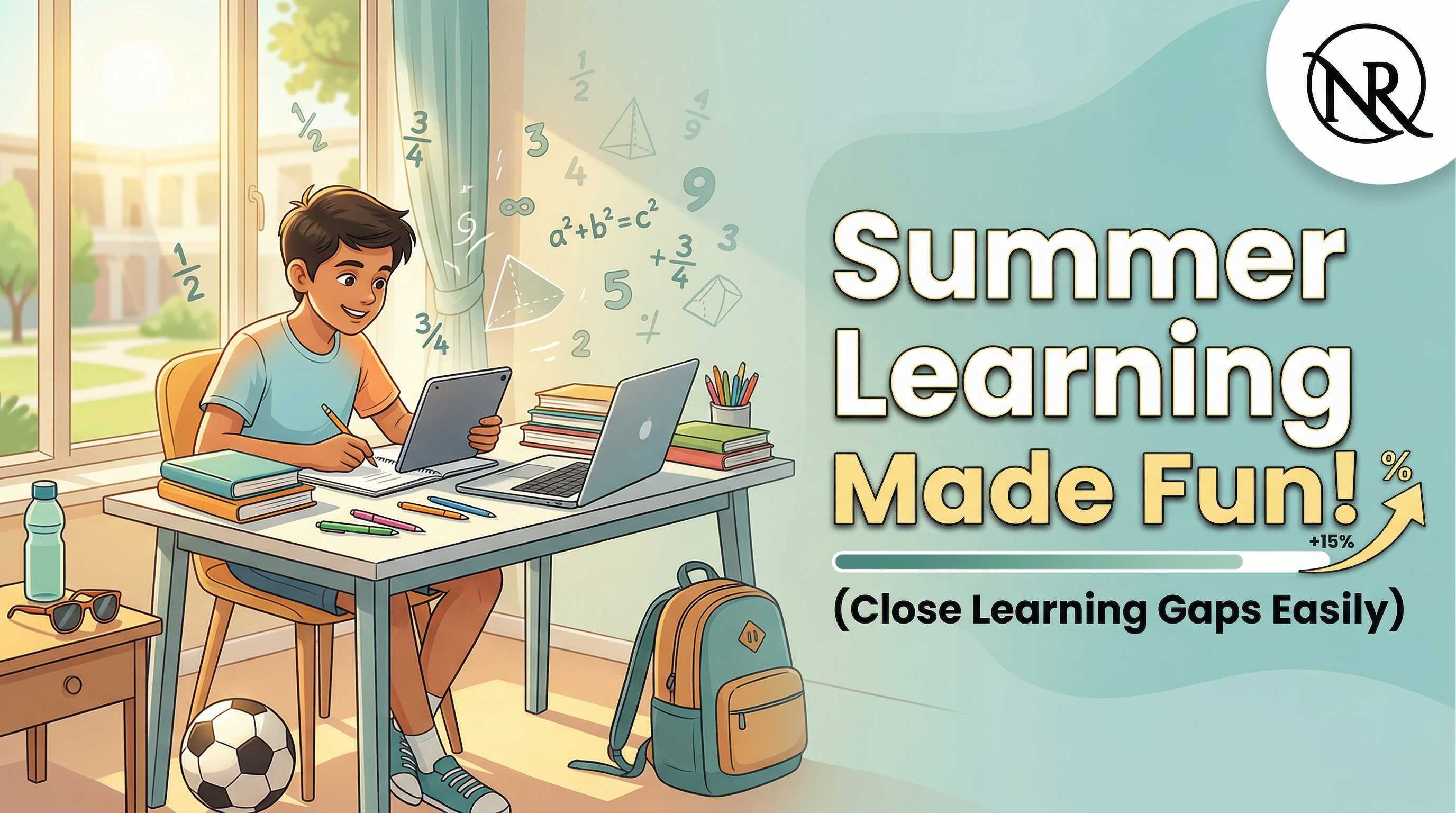
Introduction (Stronger Hook + SEO Keywords)
Summer school used to feel like a punishment. Today, it’s something very different.
Summer break is now one of the best opportunities to close learning gaps, especially in subjects like math where missed concepts build up over time. With fewer distractions and more flexibility, students can rebuild confidence—without the pressure of a traditional classroom.
Think of it less as catching up—and more as getting ahead.
Why Summer Is the Best Time to Close Learning Gaps
During the school year, students juggle multiple subjects, deadlines, and social demands. Summer offers:
- Focus on one subject at a time
- Self-paced learning
- Reduced stress and pressure
Research consistently shows the “summer slide” is real—but when used intentionally, summer becomes a learning accelerator.
👉 Even 6–8 weeks of focused learning can outperform months of distracted study.
Step 1: Identify the Real Learning Gaps
Grades don’t tell the full story. Instead, look for:
- Where does the student hesitate?
- Which topics do they avoid?
- Are foundational skills missing?
Common math gaps:
- Fractions & decimals
- Algebra basics
- Problem-solving skills
👉 Use short diagnostic tests or past homework to spot patterns.
Step 2: Set Clear, Achievable Goals
Avoid vague goals like “get better at math.”
Instead, aim for:
- “Master multiplying fractions”
- “Complete Algebra I concepts”
- “Improve problem-solving accuracy”
Make goals:
- Specific
- Measurable
- Time-bound
This turns learning into a mission—not a chore.
Step 3: Choose the Right Learning Format
Summer learning shouldn’t feel like school. Choose what fits best:
🔹 Online Learning Platforms
Self-paced, interactive, and often gamified.
🔹 Small Group Tutoring
Adds structure and peer motivation.
🔹 1-on-1 Coaching
Best for targeting specific gaps quickly.
🔹 Hybrid Learning
Combines flexibility with guidance (often most effective).
👉 Engagement matters more than format. If it feels like punishment, it won’t work.
Step 4: Keep It Light and Consistent
Avoid turning summer into a strict school schedule.
Instead:
- 30–60 minutes per day
- 4–5 days per week
- Mix learning with fun
👉 Consistency beats intensity.
Step 5: Focus on Progress, Not Pressure
Motivation increases when students see progress.
Try:
- Visual progress trackers
- Small milestone rewards
- Celebrating effort (not just results)
Make it real-world:
- Cooking → fractions
- Travel planning → budgeting math
- Games → logic & strategy
Step 6: Blend Learning with Summer Fun
The goal isn’t to replace summer—it’s to enhance it.
- Study in the morning → free afternoons
- Learning goals → weekend rewards
- Screen time → outdoor breaks
👉 Think of it as “stealth learning”—effective but enjoyable.
Common Mistakes to Avoid
🚫 Overloading the schedule
🚫 Using boring or outdated materials
🚫 Focusing only on weaknesses
🚫 Waiting until August to start
The Bigger Benefit: Confidence
Closing learning gaps isn’t just academic—it’s psychological.
Students return to school:
- More confident
- More engaged
- More willing to participate
Confidence often matters more than content.
Final Thoughts
Summer learning is no longer a fallback—it’s an advantage.
With the right approach, students can:
- Close critical gaps
- Build momentum
- Start the next school year ahead
And they can do it—without sacrificing summer fun.