
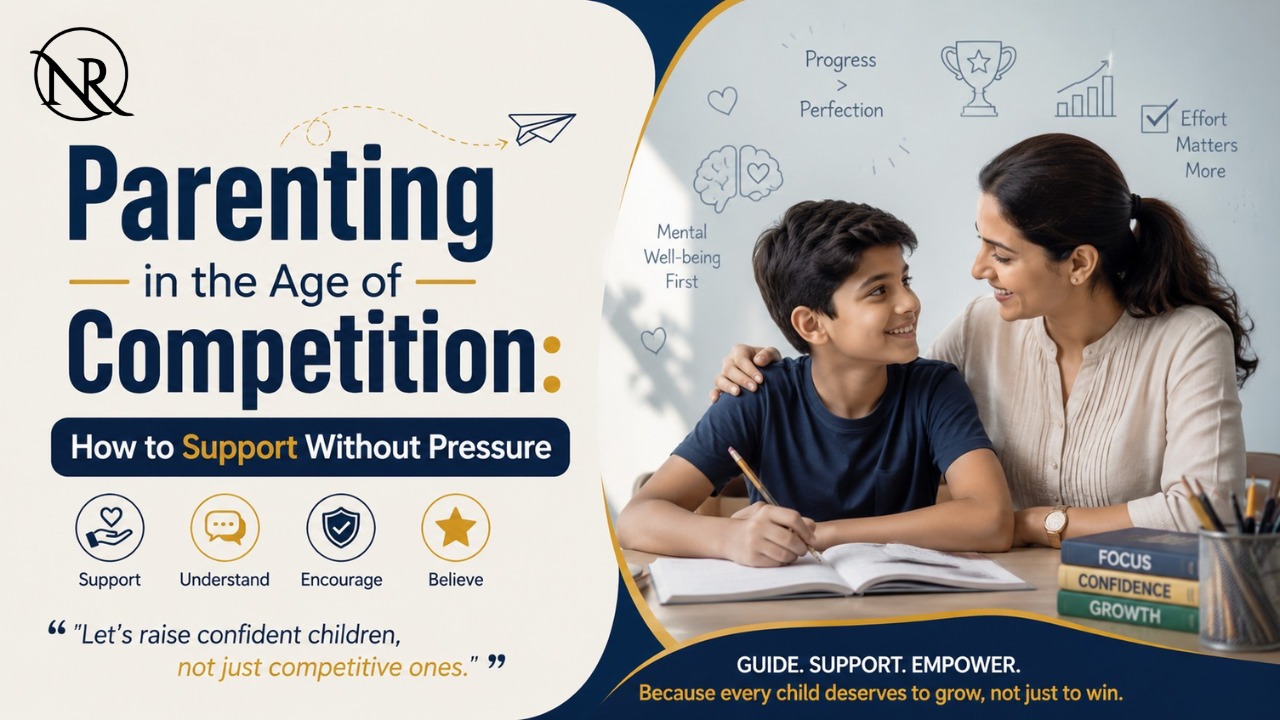
Parenting in the Age of Competition: How to Support Without Pressure
In today’s India, competition starts early. Board exams, entrance tests, rankings, coaching classes, and constant comparison have become part of childhood for many children. Parents want the best for their kids — and that desire is natural. The challenge is converting that desire into support instead of pressure.
As educators and parents, our real role is not to push children harder than they can handle, but to create an environment where they can grow with confidence, curiosity, and emotional strength.
Why Pressure Has Become the New Normal
Several forces are intensifying the competitive atmosphere:
- High-stakes exams and limited seats in premier institutions
- Social media showcasing “perfect” success stories
- Fear of falling behind peers
- Well-meaning but intense parental expectations
- Coaching culture that often prioritises marks over understanding
When children internalise the message that their worth equals their ranks, anxiety, burnout, low self-esteem, and loss of interest in learning become common.
Signs Your Child May Be Feeling Pressure
Watch for these subtle (and not-so-subtle) indicators:
- Irritability, withdrawal, or sudden drop in interest
- Sleep problems or frequent headaches/stomach aches
- Perfectionism or extreme fear of making mistakes
- Comparing themselves constantly with others
- Saying things like “I’m not good enough” or “What’s the point?”
Early recognition allows timely support.
How to Support Without Adding Pressure
1. Separate the child from the result
Praise effort, strategy, curiosity, and improvement more than the final marks.
Instead of “You must get 95%,” try “I’m proud of how consistently you prepared and how you handled the tough chapters.”
2. Focus on the process, not just the destination
Help children set small, realistic goals. Celebrate the journey of learning rather than only the final scorecard. This builds resilience and a growth mindset.
3. Create emotional safety at home
Make home a place where failure is discussed openly and without shame. Children who know they are loved regardless of results recover faster from setbacks.
4. Limit unnecessary comparisons
Avoid comparing your child with cousins, classmates, or neighbours. Every child has a unique pace and set of strengths. Comparison often kills intrinsic motivation.
5. Balance academics with play, hobbies, and rest
Sports, art, music, reading for pleasure, and unstructured free time are not distractions — they are essential for mental health and creativity. A well-rested mind performs better.
6. Model the behaviour you want to see
Children watch how parents handle stress, setbacks, and success. When parents manage pressure calmly, children learn to do the same.
7. Communicate, don’t interrogate
Instead of “How many marks did you get?”, ask “How are you feeling about the exam?” or “What was the most interesting thing you learned?” Open conversations build trust.
8. Partner with the school
Stay connected with teachers. Share observations about your child’s stress levels. Collaborative support between home and school is far more effective than pressure from either side alone.
Practical Daily Habits That Reduce Pressure
- Fixed, reasonable study hours with built-in breaks
- Device-free family time every day
- One-on-one time focused only on the child (no advice, just listening)
- Encouraging questions and independent thinking
- Teaching that setbacks are information, not identity
A Message to Parents
Wanting your child to succeed is love. Turning that love into constant pressure is fear. The most successful adults are usually those who grew up feeling secure enough to take risks, make mistakes, and keep learning.
Your child’s future is not decided by one exam or one rank. It is shaped by their confidence, character, curiosity, and ability to bounce back. These qualities develop best in an atmosphere of support, not fear.
As educators and parents, our shared responsibility is clear:
Raise children who are capable and happy — not just high scorers who are exhausted.
Support them. Guide them. Believe in them.
But never let the race for marks become more important than the child running it.